Biella, R., Brandimarte, L., Mazzoleni, M., & Di Baldassarre, G. (2026). Form over Function: How design expectations shape what counts as a climate service. Climate Services, 43, 100674.
Breaking: Scientists discover a clear bias towards form and function amongst users of climate services!
As the author of an experienced designer’s late career doctoral thesis on epistemologically-sensitive service design, the recent turn towards design-infused research studies from inter-disciplinary teams of climate scientists is undeniably an encouraging development. Earlier, I had reviewed the work of Holden et al. (2026) whose mixed methods study across 5 African countries comprising 530 interviews of end-users revealed a significant gap in user needs which remains unfulfilled due to a lack of meta-theoretical scaffolding at the whole knowledge systems level. Now, I take a closer look at Biella et al. (2026) who, as recently as August this year, published findings from their “survey of researchers, developers/providers, and practitioners involved in European climate-service initiatives” (p. 1). Climate Services users bias towards Form and Function is the hypothesis that Biella et al. (2026) test in their study as illustrated by their methodological diagram below.
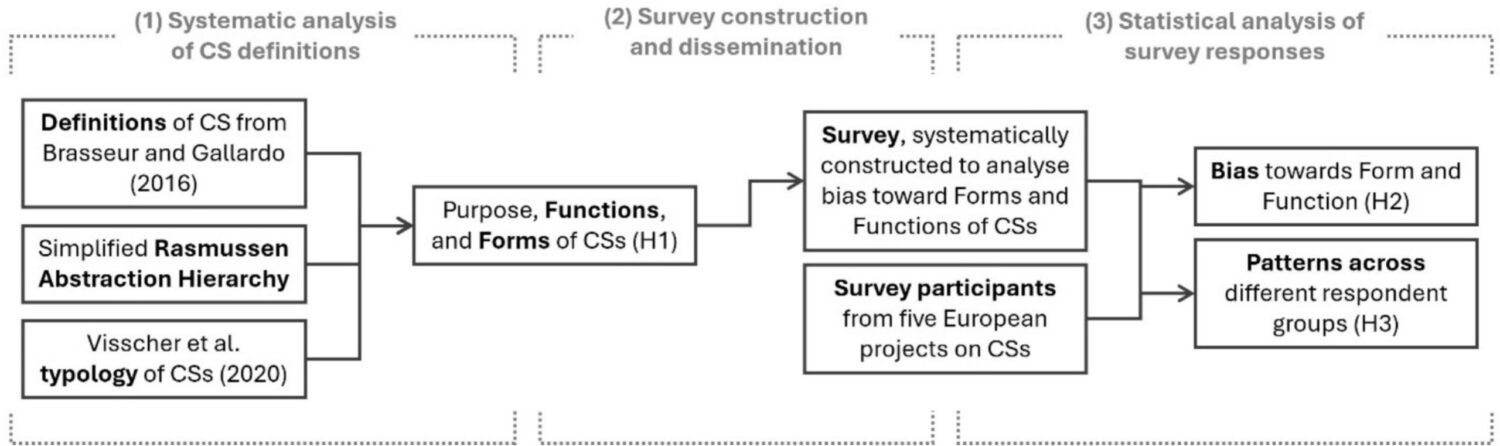
What is also interesting to note is that this study focused on European climate-service initiatives while Holden et al. (2026) studied African ones. That is, we are slowly able to build a knowledge base of actionable design insights being acquired systematically (“research”) by scientists from a diverse range of users. In fact, as I review Biella et al. (2026) right now, it strikes me that all of these interdisciplinary teams of climate scientists are generating a deep well of design knowledge on Users & Context for climate services. This illustration from Biella et al. (2026:7, Figure 2) for example clearly speaks design language. I have taken a screenshot from teh article in order to include the citation and the caption as written by them (Biella et al. 2026:7).
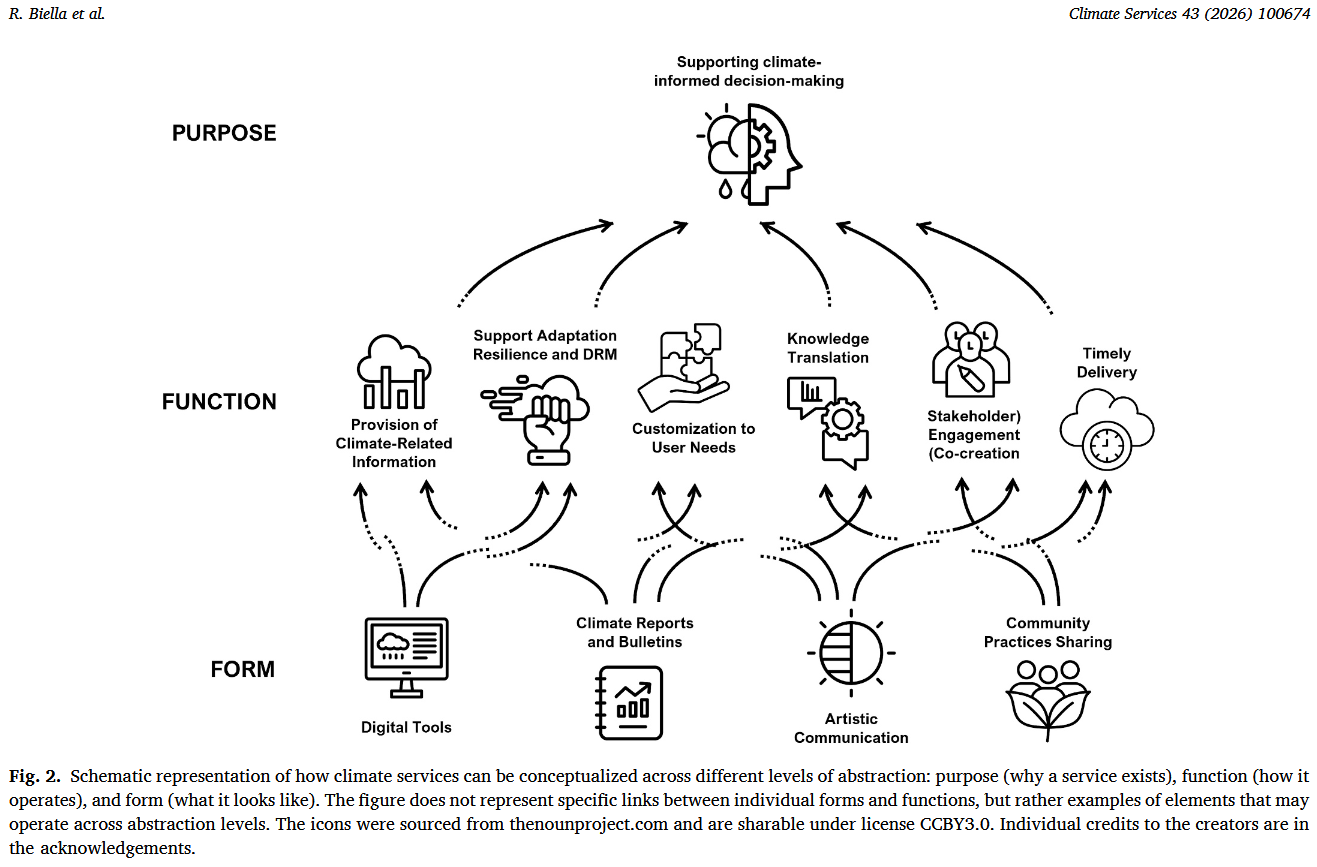
Few designers will argue that such a diagram, generated after a scientifically grounded study, does not provide insights for design planning and design strategy for preparing work on climate services design. This really is my biggest takeaway from science; teams of scientists are making extremely valuable contributions to design and co-creation projects. It make me wonder what it is that human-centric design can contribute in return to such planetary design initiatives.