Niti Bhan

Lovingly made by human mind and hands

Menu
  • Home
  • About
  • Blog
  • Publications
  • Design Research
  • Contact
Menu

Month: October 2026

Meta-research for improving design practice

Posted on October 31, 2026November 2, 2026 by Niti Bhan

Ioannidis, J. P. (2018). Meta-research: Why research on research matters. PLoS biology, 16(3), e2005468.

According to John Ioannidis of the Meta-Research Innovation Center at Stanford (METRICS), whatever else that the words meta-research may convey to the reader, this relatively new young discipline is the study of bias (Ioannidis 2018:1/6).  What I find interesting is that Ioannidis (2018) is very clearly and firmly situated within the positivism/positivism (a research paradigm, the oldest worldview on ‘science’ and its method). Thus, unlike my other reflective reviews, this one will intersperse more articles on the topic to round out the authorial stances and viewpoints. While research on research matters indeed (Ioannidis 2018), the how and why it matters will differ according to what, where, with whom, and from which viewpoint (research paradigm/worldview) one approaches the very notion of research as scientific engagement. For instance, in my school of design research, scientific acts (Sato 2000) are undertaken with the aim to improve design performance in the world (Poggenpohl & Sato 2009); and, if a better means to understand and represent our ‘users’ may be necessary to overcome embedded bias in the method or tool or practice implemented to elicit understanding of a people, then it follows that one’s user-centric design practice will inevitably improve with illumination of blindspots. Here,  for this blogpost I do not quibble between user-centric and human-centric although there are strands of design research discourse which do. Here, I am using the best word for clarity of communication to the widest audience, not just within the confines of academic discourse.

McGee, R. G., & Dawson, A. C. (2020). Fake news and fake research: Why meta‐research matters more than ever. Journal of Paediatrics and Child Health, 56(12), 1868-1871.

“Meta-researchers study, analyse and critique the research pathway”(McGee & Dawson 2020:1868). And, because my own meta-research sits outside the dominant research paradigms of the scientific method espoused by McGee & Dawson (2020) I will reverse the order of the words used by the authors’ to describe the elements which meta-researchers focus on, such as how to conduct, how to test, how to communicate, how to verify, and how to reward. That is, meta-research focuses on the most important set of How To questions in the pursuit of systematic knowledge production (“research”). What I discarded from the original sentence structure is the word choice made by McGee & Dawson (2020) such as “reproducibility” with “how to verify” next to it in brackets. These are reflections of the set of assumptions encapsulated by their research paradigm; positivism or postpositivism which underpins ‘the’ scientific method. This is not to imply that research using an interpretivist or constructivist paradigm is not science but that there has been a long and contentious history where qualitative methodologies (originally called naturalistic inquiry by Egon Guba) had to battle for legitimacy, recognition, and respect in the corridors of knowledge production. Thus, my preference for the clarity yet flexibility of the “how to” explanations used by McGee & Dawson (2020) to describe the interests of meta-research, including my own. They are more flexible for application across a range of research paradigms.

Continue reading “Meta-research for improving design practice”
Why user needs in climate services design remain unfulfilled

Posted on October 29, 2026October 28, 2026 by Niti Bhan

Holden et al. (2026) recently published very interesting findings in Nature Climate Action and I find they support the arguments I make in my thesis (albeit from a different angle). They “investigate the relationship between users’ current climate-service use and desired needs for completely new climate services for nature-based solutions in Sub-Saharan Africa, based on 530 interviews” (Holden et al. 2026) of people involved in nature-based projects in Ghana, Kenya, Tanzania, Madagascar and South Africa. For the purpose of this excited blog post, I’ll use the Conversation piece written by 4 members of the large author team to popularize their research. What is most interesting, from the service design point of view, is their conclusion:

Simply asking people what climate information they need is not enough. Scientists, providers, users and local and Indigenous knowledge holders need the time, resources and incentives to develop climate services together. (Holden et al. 2026)

That is, simply eliciting user needs is not enough. Co-creation is required, and, most importantly, climate services must be co-created with multiple knowledge systems if they are to be truly useful to the end-users. Nature-based solutions cannot rely only on modern western science but must find ways to collaborate with the indigenous, local, traditional knowledges of the setting.

More than 80% said existing climate services had limitations. One major problem was that Indigenous and local knowledge forecasting or decision making was not connected to formal climate services. For example, in Turkana, Kenya, traditional seers known as Emuron use Indigenous practices to anticipate severe weather and other climate disasters. Elders also send scouts to assess pasture and water before deciding where livestock should move. But these practices are not connected to formal climate services. (Holden et al. 2026)

I see this as a service design challenge, and one which the dominant knowledge system may not be in a position to fulfill. Here, the missing component of ‘user needs’ is not ‘needs’ per se so much as it is the knowledge of the users themselves which is needed. How might we co-create services with multiple knowledge systems?  It is this challenge I address, as a designer and researcher, in my doctoral thesis, beginning with upfront user research for planning and design of just and equitable co-creation interfaces for such public service projects. From my perspective as a professional design researcher, Holden et al. (2026) conducted valuable user research amongst 530 users of climate services in multi-epistemological settings where local, traditional, and indigenous knowledge systems can be expected. Clearly, to find scholarship which pinpoints the exact challenge I chose to focus on as one which remains unfulfilled is exciting.

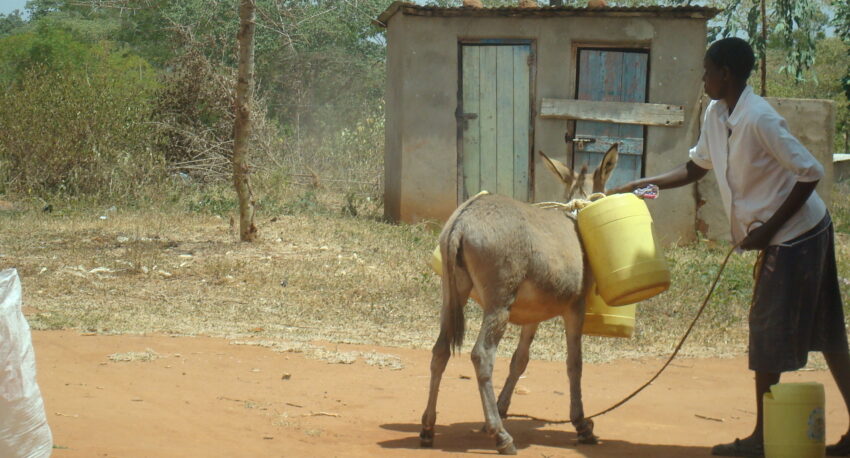
Featured image: A photograph of the water supply system in an arid region of Kenya, taken by Niti Bhan in October 2011. 

An Exhibition of Design Process, not Product

Posted on October 28, 2026October 27, 2026 by Niti Bhan

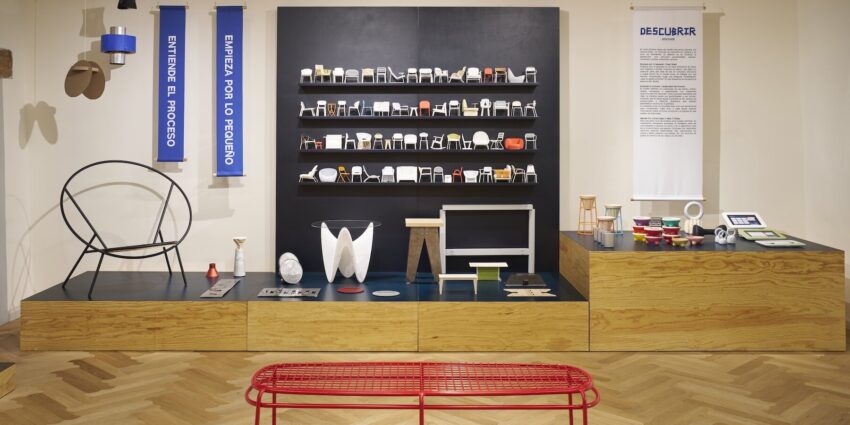
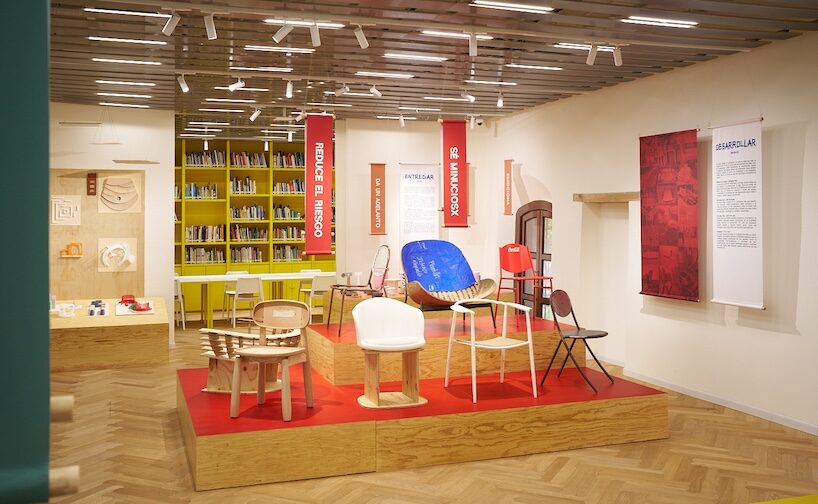
Imagine a museum which curates a design exhibition, but does not focus on the products of design. In Mexico City, the Museo Franz Mayer has done just this. Curating the work of studio JDE, founded by industrial designer Jorge Diego Etienne, this exhibition focuses on:

the iterative processes preceding market production, exhibiting preliminary sketches, scale models, working prototypes, material experiments, 3D printed studies, and unreleased design concepts. (Vergopoulou 2026)

Literally, the playground of the designer’s mind is what the exhibit curator has unexpectedly chosen to valorize and foreground. More such, please. Anyone can make pretty pictures, but to unpack your design process and your prototypes shows the path you have taken through the entire design journey from “I think I will make something” to “Look at this”. Jorge Diego Etienne believes “his country needs to progress from a “Made in Mexico” culture to one of “Designed in Mexico”” (Treffinger 2025). More than 20 years ago, in my first column for BusinessWeek (A Competitive Nation, By Design), suggested something to this effect – a future which distinguished making from conceiving, developing, iterating, and testing. By curating the inner workings of a design consultancy, the Museo Franz Meyer has just managed to capture my heart:

The exhibition layout is structured around the studio’s five methodological stages and fifteen core design principles, framing physical prototyping and error mitigation as fundamental risk-reduction tools. (Vergopoulou 2026)

Design is relevant not only for its results, but also for its processes and methods , where mistakes are a step towards success. The exhibition , which will inaugurate the Design and Processes Room and the Living Design Library, reveals how every stumble and correction is an essential part of learning. (Museo Franz Meyer)

Now, let us see such exhibitions for service design, business model design, or even new venture design. Imagine being able to trace the evolution of a successful startup from its original concept through all its iterations?

Marginalia

Posted on October 26, 2026October 25, 2026 by Niti Bhan

I will always name my blogs “Perspective”, as I had been doing from the very beginning (version one, 2005-2007; version two, 2008-2010) but this one, I realize, is currently behaving more like the notion of marginalia. However, there are umpteen blogs on wordpress called Marginalia; not that I’d change the name.

But I find myself writing this post anyway as I notice the trend on the blog lately. What I’m writing down these days are all the thoughts I would have written in the margins of the literatures I reviewed over the past few years for my doctorate. This is where I get to express my own opinion without the craft of academese to scaffold the discussion of literature. To enter dialectical engagement with the authors in a manner almost impossible in a research article. Here, on the blog, I can intersperse snippets from their article, their research study, their findings, and add my two cents worth of reflexivity.

At the same time, I find myself doing the same with non-academic articles, such as responding to this from the Bauhausian.com digital platform. I don’t know whether this pattern will last, but for now its certainly in full flow. It might be due to the the intense work I did over this past year to prepare my doctoral thesis for re-examination. Unexpectedly, that has left me energized to think and respond when I come across interesting content and then itching to respond.

So, let there be marginalia.

Building Bridges From Prototype to Production

Posted on October 23, 2026October 24, 2026 by Niti Bhan

Reading “Bauhaus and Mass Production” on the Bauhausian digital platform makes me want to add some of my thoughts on the gap the author identifies as seminal to understanding the legacy of the Bauhaus.

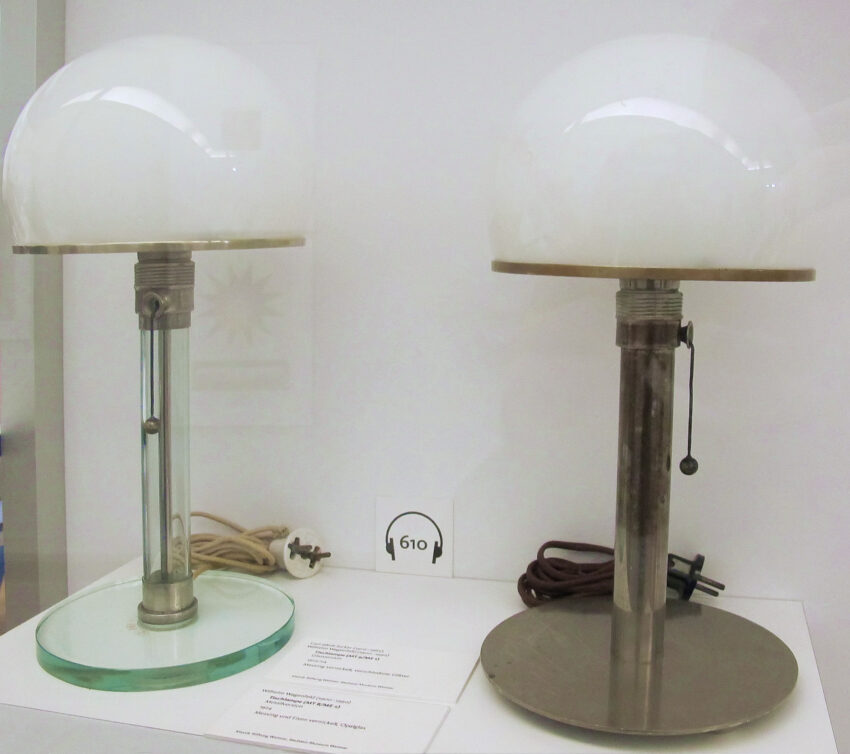
The Bauhaus was a laboratory for industrial design, but laboratories generate failed experiments as well as successful transfers. Its most useful story is not that it solved mass production. It learned to design for the possibility of reproduction—and then encountered the economic realities that determined whether reproduction actually happened. (Bauhausian.com, n.d.)

The Bauhaus aimed to build bridges between the materials of industrial production and the craft of design as they experimented with new ways to manipulate new materials (steel tubes, for example). The bridge being built here was industrial design purposefully aimed at the needs of mass production, as the author points out above. That is, a bridge between design and engineering. What was missing here was business (“economic realities”), the third leg of innovation. That would arrive as its own set of design constraints many decades later.

The German Bauhaus … represents an important and significant endeavor toward devising both a general definition of design and a method of design education in the twentieth century. Although … the Bauhaus was closed in 1933, it was to be reborn in 1937 in Chicago under the name of the New Bauhaus. (Findeli 1990:4)

As Findeli (1990) describes, circumstances led to Moholy-Nagy (the German Bauhaus teacher who founded the Chicago school) being requested to “reorient its pedagogical program to bring it more in line with the priorities of Chicago’s skeptical businessmen” (p. 6). That is, the foundation of the design + engineering orientation to prepare industrial designers for mass manufacture which the German Bauhaus is recognized to have established (Bauhausian.com, n.d) came to America where it was encouraged to confront commercialization in earnest (Findeli 1990). In effect, the original blend of design + engineering was now being asked to shake hands with business.

This means that the statement, “form follows function,” has to be supplemented; that is, form also follows – or at least it should follow – existing scientific, technical and artistic developments, including sociology and economy.“‘ (Findeli 1990:10 citing Moholy-Nagy, emphasis added)

Findeli (1990) does not pursue that little snippet I emphasize in the quote above any further in his paper, which instead focuses on design pedagogy and its philosophical foundation as developed by Moholy-Nagy. It is here that I will have to jump forward in time another number of decades to arrive at the point where we have come to take for granted that a blend of design, engineering, and business is the expected knowledge-base of professionals working at the very front-end of product development.

Continue reading “Building Bridges From Prototype to Production”

Does a chatbot dream of research paradigms?

Posted on October 22, 2026October 22, 2026 by Niti Bhan

Weber, J., & Prietl, B. (2022). AI in the age of technoscience: On the rise of data-driven AI and its epistem-ontological foundations. In The Routledge Social Science Handbook of AI (pp. 58-73). Routledge. 

As I engaged with the meta-theoretical foundations of knowledge-making for scaffolding methodological development in my doctoral thesis, I increasingly began wondering what were the underlying set of assumptions (called inquiry paradigm by Lincoln & Guba 1995, 2005; also research paradigm, Pretorius 2024) which informs knowledge products spat out of a machine in response to a prompt. The dimensions of these ‘sets of assumptions’ are recognized as epistemology (the nature of knowledge), ontology (the nature of reality), axiology (the nature of values) in addition to methodology which together encapsulate a ‘research paradigm’; it lays the foundation for any systematic program of knowledge-making. Here, in the age of generative AI, when pop-ups in academic publishers’ websites offer to ‘make sense’ of the article you clicked on, it raises the question: what are the assumptions on knowledge and reality and values which underlie the knowledge product constructed by a machine? What is it’s research paradigm? How might I navigate any incommensurabilities between it’s assumptions and mine? Or, is the legacy dominance of positivism being imposed on us, regardless of our own paradigmatic preferences (e.g. constructivism or pragmatism) simply as a result of using past data to predict future content?

The book chapter I link to here by Jutta Weber and Bianca Prietl offers me some answers to these questions; and, in a way, confirms my worst case scenario. Continue reading “Does a chatbot dream of research paradigms?”

Advocating inquiry-led planning of projects (Harrison & Whyte 2026)

Posted on October 18, 2026October 27, 2026 by Niti Bhan

Harrison, J., & Whyte, J. (2026). Future-Making in the Front-End of Projects. International Journal of Project Management, 102854. https://doi.org/10.1016/j.ijproman.2026.102854

Interestingly, Harrison & Whyte’s (2026) conclusions inspired me to conceptualize and set up a class of blogposts which I am calling ‘Reflexive Reviews’ (see categories in the right-hand sidebar). What naturally caught my eye was their advocacy for “for more inquiry-led planning in projects” (p. 5), given the arguments I make in my article-based doctoral thesis and my 20 years of front-end inquiry for informing client projects as well as my own research studies. A reflexive review, thus, becomes a way for me to intersperse my observations from field studies and from client project management experiences with the contents of their essay. Whether the reflexivity of my dialectical engagement with literature on my blog is ‘critical reflexivity’ or not is path dependent on the research selected for such a review. I believe it was Alvesson & Sandberg (2011) who observed that the “critical” in ‘critical reflexivity’ can sometimes overwhelm the “reflexivity” (see pg. 252).

Here, I take the stance of an experienced practitioner in doing more or less that which Harrison & Whyte (2026) advocate for in their discourse of project management. What is interesting is that what I’ve been doing has its roots in the front-end of human-centered design and product development, also called innovation planning or design planning (Owen 1992, 2001; Kumar 2012; Keeley et al. 2013). I will use another quote to help explain where I discern nuanced differences between understandings of inquiry, planning, and the front-end when approached from different disciplines (see Davies, Manning & Söderlund 2018). Emphasis is added to distinguish the two viewpoint they compare.

We suggest that project planning could benefit from complementing early-stage certainty and commitment with more reflexive and inquiry- led practices that allow for iteration, divergence, and adaptation over time. (Harrison & Whyte 2026:5 with emphasis added)

Continue reading “Advocating inquiry-led planning of projects (Harrison & Whyte 2026)”

There is a new lens by which I can see

Posted on October 16, 2026October 17, 2026 by Niti Bhan

I was taken by surprise today as I reviewed a couple of links I’d bookmarked to return to after my manuscript revision was complete. In the first, blogged on The Prepaid Economy blog, I suddenly found myself noticing that the work done over the past 20 years on the informal economy was, in fact, a means to ‘dismantle the monolith’. Here, the monolith is clearly that of an undifferentiated and unsegmented mass of peoples lumped together under easy-to-use labels such as “informal sector” or “bottom of the pyramid” which collapse all diversity, heterogeneity, and plurality into the convenience of one single lens by which to call them all. Four (4) billion peoples live on “$2 a day” and lost all other distinction not to mention individuality when they became “the BoP”. The informal economy does not even get this discretionary cash flow as a distinguishing factor. All of it around the world is relegated to the shadows, outside the lines clearly drawn for “formality”. It struck me then, as I pointed out how this most recent research (by the OECD) is the first I’ve seen which explicitly states what we’ve been saying for 20 years: One size does not fit all. In order to dismantle this monolithic view predicated on grand challenge scales (“the next billion” as the target “user” for planning design actions), one must unpack the patterns of financial behaviour at the level of first principles in order to construct models to segment that which cannot be predicted.

I’ll come back to this later, here I want to move on to the second link I reviewed this morning, one on community environmental behaviour observed during a South African research study in a rural community. Empirical data contradicts dominant narratives which assume financial incentives will be required for the poor to involve themselves with sustainability. Interestingly however, what they found was community actions on climate change adaptations were motivated by ‘ubuntu’, the Southern African philosophy predicated on kinship and relationality.

A long-standing idea in environmental research is that people are more likely to care about the environment, and do something to prevent environmental damage, once they earn enough to stop worrying about paying their bills. But what happens in rural communities with high levels of poverty, where money is scarce and environmental changes directly affect people’s livelihoods? We are economists who wanted to find out what explained environmental action best: income levels, or the strength of people’s connections to their fellow community members (Kirsten & Biyase 2026)

A relational viewpoint is revealed by the link between actions taken and the ‘strength of people’s connections” (Kirsten & Biyase 2026). The stronger the relationality, the more likely the community would take actions which would benefit all and future generations. The ‘long-standing idea’ which Kirsten & Biyase (2026) overturn with empirical evidence is an assumption in their line of work which can be problematized, as they have done. It is the result of taking a ‘rational’ viewpoint which rooted in positivism and the scientific method. Recognizing this, too, I now realize, is part of ‘dismantling the monolith’ since relational viewpoints, such as those illuminated by Kirsten & Biyase (2026) are closely identified with indigenous research paradigms, underpinning the relational axiology of indigenous knowledge systems (Chilisa 2019). There is much more to be said here but I will stake a step back instead to consider both the links and my response to them.

I can see clearly a nuanced shift in my interpretation and understanding. It is also clear that it results from the work done over these past 6 or 7 months on constructing a (meta) theoretical and conceptual frame for my doctoral research. Here now, I will pause reflexive analysis and pick it up again once I have materials to share in public. Suffice to say, I did not expect this. And must ponder its implications.

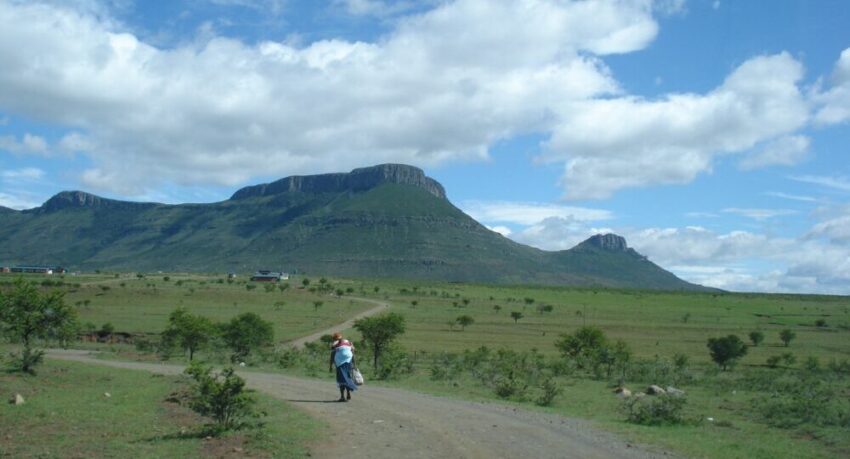
Photo taken by Niti Bhan, Eastern Cape, South Africa, January 2008

Playgrounds of the mind

Posted on October 15, 2026October 17, 2026 by Niti Bhan

They say, in the department, that nobody ever reads the synopsis (also called exegesis or kappa) except the examiners. So I followed the standard template assiduously. And failed spectacularly. Oh, I had original contributions to make, my examiners were convinced, but my presentation of my dissertation research was not only not accepted for publication (and hence public defence) but the decision agreed by all was that this was a major revision. Not a minor one. Not a moderate one. Not an outright rejection either. Nope. It was ‘go back and do it all over again’.

So I did.

As I sit here now, less than a week after sending it in again for re-examination, I can only think that this decision was the best thing that ever happened to me in my doctoral journey. A major revision comes with ample time to think, to review, to revise, and to rewrite. The committee offers you 12 months for delivery. I aimed for 3, then aspired to finish in 6 but by the time the myriad little details were all worked out and last minute corrections shoved in, it was almost 7 months before it was ready to go public. I hope my examiners haven’t forgotten me, I’ve been in my cave for so long.

This time I wrote something that wanted to be read. Its a nuanced difference, but I think an important one for me.

I now approached it as the public dissemination of academic scholarship as a doctoral candidate of a university whose birth I remember. Whose reveal party I attended in September 2007; whose prototype I toured in September 2008; and whose research community I joined in September 2019. Yet, interestingly, no matter how often I look back over almost 20 years of involvement, I cannot find any evidence that I could have ever produced anything of this quality and positionality had I begun writing my doctoral thesis any earlier than this time of life.

That is, this is not the dissertation of what is commonly known as “an early career researcher” although technically, according to the formal academic definition, that is exactly what I am at this grand old age of 60. I remember telling someone I’m not “early career” anything at this point. On one hand, as my publications show, I have only a handful of peer reviewed scientific research articles; a popular way to assess the relative “earliness” of a researcher’s career. On the other hand, I have more than 10 commissioned research reports and a track record of funded research projects going back the same 20 years. Its complicated, she said.

For now I will use the status of ‘Independent Researcher’. Its a good enough at this moment in time. I have built reputations, brands, and careers over the past 36 years. Now, I will undergo my own major revision; in no small thanks to the fatal crash of this website.

It opens a new question: What do I want to build next?

This is an absolutely wonderful question. It motivates. It does not inspire. But, what it does is, leave open many possibilities and many searchways for inspiration. In the meantime, I have my blog up and running. And, that, perhaps, is the most important thing of all at transitional times like this.

Here be ‘playgrounds of the mind‘ (with apologies to Larry Niven)…

lovingly made by human mind and hands

Posted on October 15, 2026October 17, 2026 by Niti Bhan

What do I mean by “lovingly made by human mind and hands”?

This is a short note on the tagline in the header of this website. It was written in response to the preponderance of technologies used to generate and disseminate “content” once I realized that not only was I building this site by hand, as much as possible using the barest minimum of tools available for the back-end but that I would write each and every word by hand and mind.

Out there on the internet, blog and bulletin board conversations ponder the question whether its still worth keeping a blog in the age of gen AI. Interestingly, one of the most popular answers is that a blog offers a track record of thinking and writing. Only when I saw ‘How To’ guides on writing without the help of technology did I realize the trend now to recapture the early spirit of blogging from 25 years ago. And to re-establish the human voice and p2p communication.

I would rather put errors and typos out there than run my thoughts through a machine for perfecting. It is the same rule I followed for my entire doctoral thesis. And, it is the way I learnt to write more than 50 years ago. I don’t see why I need to give that up now.

So, this is a crude handmade object. Let’s see how it fares in today’s ‘online’ and then perhaps look back and compare with how things were 20+ years ago when this domain was established and the first blogpost launched.

  • 1
  • 2
  • Next
  • Co-Creation
  • Design
  • Long Read
  • Marginalia
  • Perspective
  • Playground of the mind
  • Reflexive Reviews
  • Research
  • October 2026

Africa blindspot climate change climate services co-creation commentary cultural interface design design exhibition design research epistemological pluralism ILTK indigenous epistemologies indigenous knowledge JDE Jorge Diego Etienne local local knowledge meta-research Mexico Museo Franz Mayer nature-based projects observation plurality project planning research paradigms service design traditional user research UX research

Business Registration

Emerging Futures Lab

Y-Tunnus 2607854-3

Ymmärrys ry

Y-Tunnus 3288926-2

.

Design Research Services

Lorem Ipsum

©2026 Niti Bhan