Niti Bhan

Lovingly made by human mind and hands

Menu
  • Home
  • About
  • Blog
  • Publications
  • Design Research
  • Contact
Menu

Tag: project planning

Why user needs in climate services design remain unfulfilled

Posted on October 29, 2026October 28, 2026 by Niti Bhan

Holden et al. (2026) recently published very interesting findings in Nature Climate Action and I find they support the arguments I make in my thesis (albeit from a different angle). They “investigate the relationship between users’ current climate-service use and desired needs for completely new climate services for nature-based solutions in Sub-Saharan Africa, based on 530 interviews” (Holden et al. 2026) of people involved in nature-based projects in Ghana, Kenya, Tanzania, Madagascar and South Africa. For the purpose of this excited blog post, I’ll use the Conversation piece written by 4 members of the large author team to popularize their research. What is most interesting, from the service design point of view, is their conclusion:

Simply asking people what climate information they need is not enough. Scientists, providers, users and local and Indigenous knowledge holders need the time, resources and incentives to develop climate services together. (Holden et al. 2026)

That is, simply eliciting user needs is not enough. Co-creation is required, and, most importantly, climate services must be co-created with multiple knowledge systems if they are to be truly useful to the end-users. Nature-based solutions cannot rely only on modern western science but must find ways to collaborate with the indigenous, local, traditional knowledges of the setting.

More than 80% said existing climate services had limitations. One major problem was that Indigenous and local knowledge forecasting or decision making was not connected to formal climate services. For example, in Turkana, Kenya, traditional seers known as Emuron use Indigenous practices to anticipate severe weather and other climate disasters. Elders also send scouts to assess pasture and water before deciding where livestock should move. But these practices are not connected to formal climate services. (Holden et al. 2026)

I see this as a service design challenge, and one which the dominant knowledge system may not be in a position to fulfill. Here, the missing component of ‘user needs’ is not ‘needs’ per se so much as it is the knowledge of the users themselves which is needed. How might we co-create services with multiple knowledge systems?  It is this challenge I address, as a designer and researcher, in my doctoral thesis, beginning with upfront user research for planning and design of just and equitable co-creation interfaces for such public service projects. From my perspective as a professional design researcher, Holden et al. (2026) conducted valuable user research amongst 530 users of climate services in multi-epistemological settings where local, traditional, and indigenous knowledge systems can be expected. Clearly, to find scholarship which pinpoints the exact challenge I chose to focus on as one which remains unfulfilled is exciting.

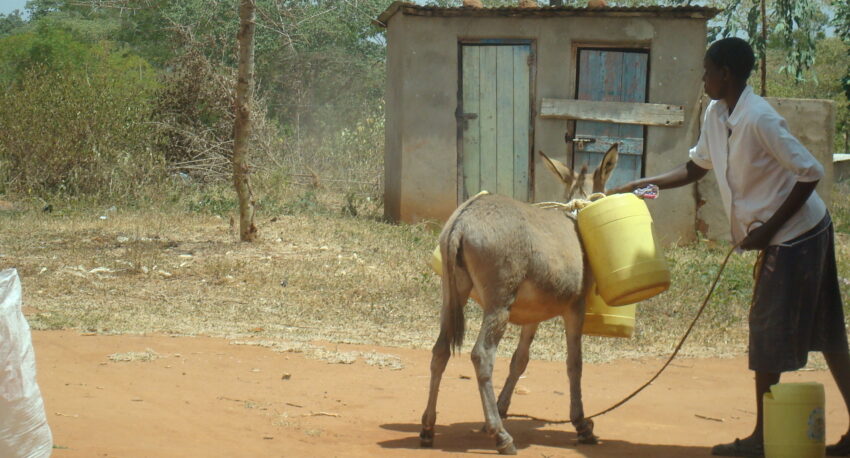
Featured image: A photograph of the water supply system in an arid region of Kenya, taken by Niti Bhan in October 2011. 

Advocating inquiry-led planning of projects (Harrison & Whyte 2026)

Posted on October 18, 2026October 27, 2026 by Niti Bhan

Harrison, J., & Whyte, J. (2026). Future-Making in the Front-End of Projects. International Journal of Project Management, 102854. https://doi.org/10.1016/j.ijproman.2026.102854

Interestingly, Harrison & Whyte’s (2026) conclusions inspired me to conceptualize and set up a class of blogposts which I am calling ‘Reflexive Reviews’ (see categories in the right-hand sidebar). What naturally caught my eye was their advocacy for “for more inquiry-led planning in projects” (p. 5), given the arguments I make in my article-based doctoral thesis and my 20 years of front-end inquiry for informing client projects as well as my own research studies. A reflexive review, thus, becomes a way for me to intersperse my observations from field studies and from client project management experiences with the contents of their essay. Whether the reflexivity of my dialectical engagement with literature on my blog is ‘critical reflexivity’ or not is path dependent on the research selected for such a review. I believe it was Alvesson & Sandberg (2011) who observed that the “critical” in ‘critical reflexivity’ can sometimes overwhelm the “reflexivity” (see pg. 252).

Here, I take the stance of an experienced practitioner in doing more or less that which Harrison & Whyte (2026) advocate for in their discourse of project management. What is interesting is that what I’ve been doing has its roots in the front-end of human-centered design and product development, also called innovation planning or design planning (Owen 1992, 2001; Kumar 2012; Keeley et al. 2013). I will use another quote to help explain where I discern nuanced differences between understandings of inquiry, planning, and the front-end when approached from different disciplines (see Davies, Manning & Söderlund 2018). Emphasis is added to distinguish the two viewpoint they compare.

We suggest that project planning could benefit from complementing early-stage certainty and commitment with more reflexive and inquiry- led practices that allow for iteration, divergence, and adaptation over time. (Harrison & Whyte 2026:5 with emphasis added)

Continue reading “Advocating inquiry-led planning of projects (Harrison & Whyte 2026)”

  • Co-Creation
  • Design
  • Long Read
  • Marginalia
  • Perspective
  • Playground of the mind
  • Reflexive Reviews
  • Research
  • October 2026

Africa blindspot climate change climate services co-creation commentary cultural interface design exhibition epistemological pluralism Fuzzy Front-End ILTK indigenous epistemologies indigenous knowledge JDE Jorge Diego Etienne literature Literature Review local local knowledge Mexico Museo Franz Mayer nature-based projects observation plurality project planning reflexivity research paradigms service design traditional writing

Business Registration

Emerging Futures Lab

Y-Tunnus 2607854-3

Ymmärrys ry

Y-Tunnus 3288926-2

.

Design Research Services

Lorem Ipsum

©2026 Niti Bhan