Niti Bhan

Lovingly made by human mind and hands

Menu
  • Home
  • About
  • Blog
  • Publications
  • Design Research
  • Contact
Menu

Author: Niti Bhan

Meta-research for improving design practice

Posted on October 31, 2026November 2, 2026 by Niti Bhan

Ioannidis, J. P. (2018). Meta-research: Why research on research matters. PLoS biology, 16(3), e2005468.

According to John Ioannidis of the Meta-Research Innovation Center at Stanford (METRICS), whatever else that the words meta-research may convey to the reader, this relatively new young discipline is the study of bias (Ioannidis 2018:1/6).  What I find interesting is that Ioannidis (2018) is very clearly and firmly situated within the positivism/positivism (a research paradigm, the oldest worldview on ‘science’ and its method). Thus, unlike my other reflective reviews, this one will intersperse more articles on the topic to round out the authorial stances and viewpoints. While research on research matters indeed (Ioannidis 2018), the how and why it matters will differ according to what, where, with whom, and from which viewpoint (research paradigm/worldview) one approaches the very notion of research as scientific engagement. For instance, in my school of design research, scientific acts (Sato 2000) are undertaken with the aim to improve design performance in the world (Poggenpohl & Sato 2009); and, if a better means to understand and represent our ‘users’ may be necessary to overcome embedded bias in the method or tool or practice implemented to elicit understanding of a people, then it follows that one’s user-centric design practice will inevitably improve with illumination of blindspots. Here,  for this blogpost I do not quibble between user-centric and human-centric although there are strands of design research discourse which do. Here, I am using the best word for clarity of communication to the widest audience, not just within the confines of academic discourse.

McGee, R. G., & Dawson, A. C. (2020). Fake news and fake research: Why meta‐research matters more than ever. Journal of Paediatrics and Child Health, 56(12), 1868-1871.

“Meta-researchers study, analyse and critique the research pathway”(McGee & Dawson 2020:1868). And, because my own meta-research sits outside the dominant research paradigms of the scientific method espoused by McGee & Dawson (2020) I will reverse the order of the words used by the authors’ to describe the elements which meta-researchers focus on, such as how to conduct, how to test, how to communicate, how to verify, and how to reward. That is, meta-research focuses on the most important set of How To questions in the pursuit of systematic knowledge production (“research”). What I discarded from the original sentence structure is the word choice made by McGee & Dawson (2020) such as “reproducibility” with “how to verify” next to it in brackets. These are reflections of the set of assumptions encapsulated by their research paradigm; positivism or postpositivism which underpins ‘the’ scientific method. This is not to imply that research using an interpretivist or constructivist paradigm is not science but that there has been a long and contentious history where qualitative methodologies (originally called naturalistic inquiry by Egon Guba) had to battle for legitimacy, recognition, and respect in the corridors of knowledge production. Thus, my preference for the clarity yet flexibility of the “how to” explanations used by McGee & Dawson (2020) to describe the interests of meta-research, including my own. They are more flexible for application across a range of research paradigms.

Continue reading “Meta-research for improving design practice”
Why user needs in climate services design remain unfulfilled

Posted on October 29, 2026October 28, 2026 by Niti Bhan

Holden et al. (2026) recently published very interesting findings in Nature Climate Action and I find they support the arguments I make in my thesis (albeit from a different angle). They “investigate the relationship between users’ current climate-service use and desired needs for completely new climate services for nature-based solutions in Sub-Saharan Africa, based on 530 interviews” (Holden et al. 2026) of people involved in nature-based projects in Ghana, Kenya, Tanzania, Madagascar and South Africa. For the purpose of this excited blog post, I’ll use the Conversation piece written by 4 members of the large author team to popularize their research. What is most interesting, from the service design point of view, is their conclusion:

Simply asking people what climate information they need is not enough. Scientists, providers, users and local and Indigenous knowledge holders need the time, resources and incentives to develop climate services together. (Holden et al. 2026)

That is, simply eliciting user needs is not enough. Co-creation is required, and, most importantly, climate services must be co-created with multiple knowledge systems if they are to be truly useful to the end-users. Nature-based solutions cannot rely only on modern western science but must find ways to collaborate with the indigenous, local, traditional knowledges of the setting.

More than 80% said existing climate services had limitations. One major problem was that Indigenous and local knowledge forecasting or decision making was not connected to formal climate services. For example, in Turkana, Kenya, traditional seers known as Emuron use Indigenous practices to anticipate severe weather and other climate disasters. Elders also send scouts to assess pasture and water before deciding where livestock should move. But these practices are not connected to formal climate services. (Holden et al. 2026)

I see this as a service design challenge, and one which the dominant knowledge system may not be in a position to fulfill. Here, the missing component of ‘user needs’ is not ‘needs’ per se so much as it is the knowledge of the users themselves which is needed. How might we co-create services with multiple knowledge systems?  It is this challenge I address, as a designer and researcher, in my doctoral thesis, beginning with upfront user research for planning and design of just and equitable co-creation interfaces for such public service projects. From my perspective as a professional design researcher, Holden et al. (2026) conducted valuable user research amongst 530 users of climate services in multi-epistemological settings where local, traditional, and indigenous knowledge systems can be expected. Clearly, to find scholarship which pinpoints the exact challenge I chose to focus on as one which remains unfulfilled is exciting.

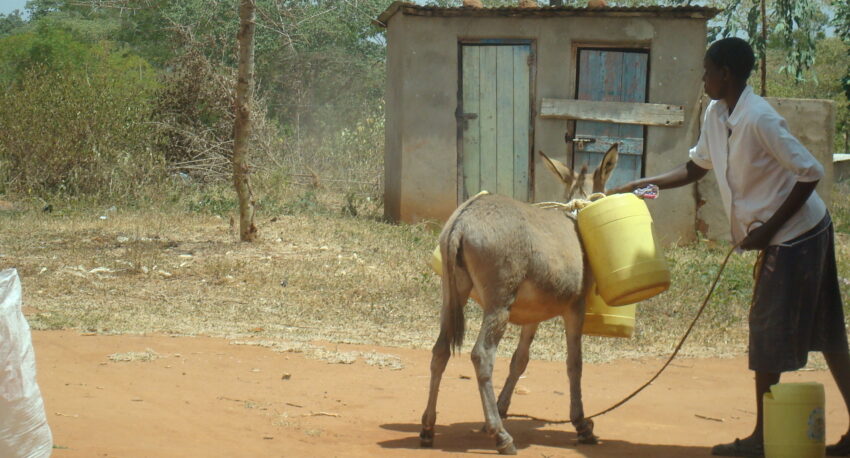
Featured image: A photograph of the water supply system in an arid region of Kenya, taken by Niti Bhan in October 2011. 

An Exhibition of Design Process, not Product

Posted on October 28, 2026October 27, 2026 by Niti Bhan

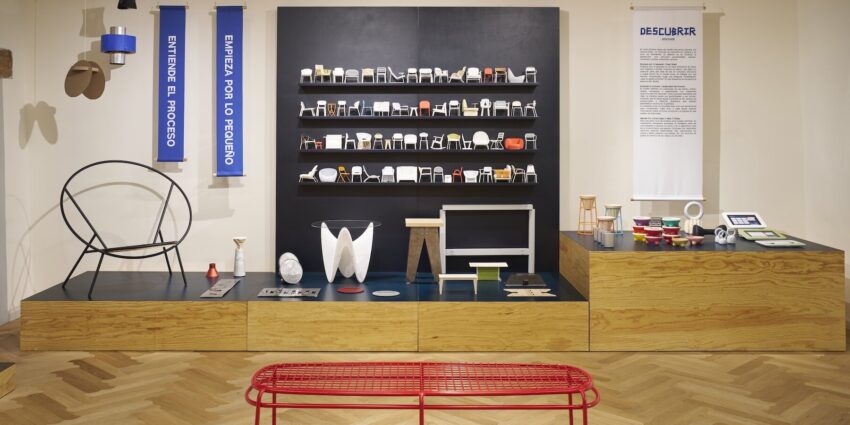
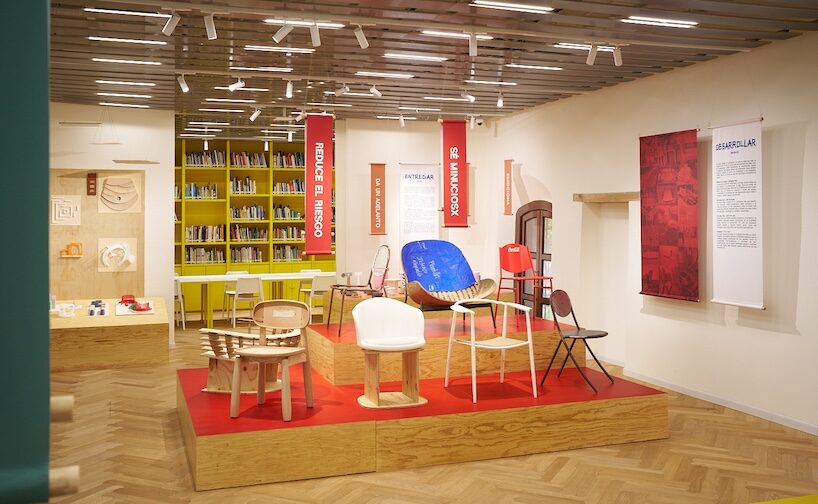
Imagine a museum which curates a design exhibition, but does not focus on the products of design. In Mexico City, the Museo Franz Mayer has done just this. Curating the work of studio JDE, founded by industrial designer Jorge Diego Etienne, this exhibition focuses on:

the iterative processes preceding market production, exhibiting preliminary sketches, scale models, working prototypes, material experiments, 3D printed studies, and unreleased design concepts. (Vergopoulou 2026)

Literally, the playground of the designer’s mind is what the exhibit curator has unexpectedly chosen to valorize and foreground. More such, please. Anyone can make pretty pictures, but to unpack your design process and your prototypes shows the path you have taken through the entire design journey from “I think I will make something” to “Look at this”. Jorge Diego Etienne believes “his country needs to progress from a “Made in Mexico” culture to one of “Designed in Mexico”” (Treffinger 2025). More than 20 years ago, in my first column for BusinessWeek (A Competitive Nation, By Design), suggested something to this effect – a future which distinguished making from conceiving, developing, iterating, and testing. By curating the inner workings of a design consultancy, the Museo Franz Meyer has just managed to capture my heart:

The exhibition layout is structured around the studio’s five methodological stages and fifteen core design principles, framing physical prototyping and error mitigation as fundamental risk-reduction tools. (Vergopoulou 2026)

Design is relevant not only for its results, but also for its processes and methods , where mistakes are a step towards success. The exhibition , which will inaugurate the Design and Processes Room and the Living Design Library, reveals how every stumble and correction is an essential part of learning. (Museo Franz Meyer)

Now, let us see such exhibitions for service design, business model design, or even new venture design. Imagine being able to trace the evolution of a successful startup from its original concept through all its iterations?

  • Co-Creation
  • Design
  • Long Read
  • Marginalia
  • Perspective
  • Playground of the mind
  • Reflexive Reviews
  • Research
  • October 2026

Africa blindspot climate change climate services co-creation commentary cultural interface design design exhibition design research epistemological pluralism ILTK indigenous epistemologies indigenous knowledge JDE Jorge Diego Etienne local local knowledge meta-research Mexico Museo Franz Mayer nature-based projects observation plurality project planning research paradigms service design traditional user research UX research

Business Registration

Emerging Futures Lab

Y-Tunnus 2607854-3

Ymmärrys ry

Y-Tunnus 3288926-2

.

Design Research Services

Lorem Ipsum

©2026 Niti Bhan