
A Something can also be experienced as a startling moment of synchronicity and convergence in the researcher’s lived reality, whether on-Country or in cyberspace or a workspace. It may emerge as an unexpected or unexplainable synchronicity within the data itself. (Yunkaporta & Moodie, 2021)
Stumbling across a rather large chunk of text that encapsulates the issue I have been trying to figure out over here in my blog ba is a Something in Aboriginal English (Yunkaporta & Moodie, 2021). I have struggled to find the words to articulate the barely formed sense of knowing what must have happened but without the necessary education with which to find it and say it.
The relationship between the “modern world” and the “developing world” has often been expressed in the language of development. Although vast sums have been invested trying to find a solution, matters appear to have got worse rather than better. It would appear that some development projects actually contribute to this deterioration. In addition development has often produced an environmental crisis and the serious depletion of forest resources (Banuri and Marglin 1993).
A largely neglected aspect of such development is the dominant part played by “modern” or “western scientific” knowledge. Not only is indigenous knowledge ignored or dismissed, but the nature of the problem of underdevelopment and its solution are defined by reference to this world-ordering knowledge.
Until very recently little or no credence was given by scientists and scholars grounded in Western tradition to the validity of non-Western indigenous knowledge. Even now when Western scholars begin to acknowledge the existence of indigenous knowledge they have trouble understanding and interpreting what for them is a foreign level of reality.
Since indigenous knowledge generation does not use the same methods of data collection, storage, analysis and interpretation as the scientific tradition, those trained in the scientific tradition have great difficulty in acknowledging the validity of data generated in unfamiliar ways.
Even those who do acknowledge the existence of indigenous knowledge generally apply scientific methods to verify and validate indigenous knowledge. They seek to recognize their categories in native systems, and apply their typologies to what they think indigenous knowledge systems are.
Few Western scholars are able to accept indigenous knowledge as valid in and of itself. They have great difficulty rethinking groupings so as to uncover basic organising principles which are unfamiliar, and to identify and affirm the integrity of indigenous systems. (Studley, 1998)
This is it.
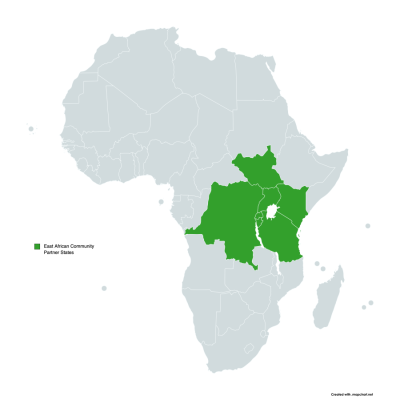 This captures and articulates the issue that I first came face to face with when conducting the ‘rigorous literature review’ required as part of the terms of reference (ToR, for those in the know) for our commissioned project to understand and map the dynamics of the regional informal trade ecosystem as evidenced in the borderlands of the East African Community (EAC) – more than 20 key borderland ecosystems are regionally important hubs for trade between Kenya, Tanzania, Burundi, Rwanda, Uganda, the Democratic Republic of the Congo (DRC), and South Sudan (at last count, I hear both Somalia and Ethiopia are interested in joining the fastest growing region on the continent of Africa).
There was a jarring cognitive dissonance between the literature of informal trade in East Africa and the lived reality of entrepreneurs in economic informality. Informal traders, especially women who dominate the fresh produce trade across borders and in aggregator produce markets, were designated as poor livelihood actors – marginalized, vulnerable, helpless and eking out a living on the side of the road under the hot sun. There was no attempt at differentiation, although scholars such as Ravi Kanbur had long pointed out the need for disaggregation of the informal sector. No attempt had been made to recognize the skills and talents and experience required to trade fulltime or that regional and cross-border wholesale trade was a professional occupation of some status and standing. Everyone was meagre, aural pun intended, lacking skills and being unproductive just sitting there (ILO, I’m looking at you).
Today I have the words and the knowledge to state that informal trade requires a body of knowledge, and it is a valid knowledge system in its own right with regional differences of course. Otherwise, you would not have evidence of clear progression and career paths for both women and men choosing to enter the trade, nor would a visible culture of mentoring, apprenticeship, and business development and growth strategies exist. Of course not everyone succeeds, and some remain at a precarious level. But pathways and strategies not only exist to grow one’s revenue and lines of business but they are shared and known amongst the business community. Any number of different business groups and associations – both formal and informal – exist in any commercial hub (I’ll use Kenya as my research context for now). Chamas and merry-go-rounds are de rigeur and associations and SACCOs in every trade and service sector supporting them. Kinyanjui talks about group agency as a driver in economic informality (2014 and 2019 also I think) while I have observed this first hand in any number of field projects over the past decade or more.
Anyway, this explains why I’ve been chasing Yunkaporta’s thinking tools – they are to me what my thinking tools (portfolio, pg 38) were for the mama mbogas of Nairobi – a visual device for thinking and planning in a volatile and uncertain complex system. If I am to do justice to the entrepreneurs (traders, artisans, farmers – see Kinyanjui, 2019) operating in economic informality, from the perspective of a multidisciplinary designer, then I need to approach them as professionals with skills and knowledge to operate in their own commercial environment (a socio-technical-ecological system imo but I’m still exploring that label). The only way to do that is from outside the confines and boundaries of the western knowledge system, just the way they operate outside the confines and boundaries of the formal economic system (also called the modern economy by Kenya’s statisticians, a telling label in its own right).
This is an indigenous/Indigenous economic system, to be approached on its own terms. This is why formal economy mindset (aha, western knowledge system) and its assumptions – see the whole space of finance – fails to recognize the logics. I’ll give you an example or two right now for clarity – profit margins? there aren’t any, relationships drive pricing rather than margins; savings? why should cash sit dead in a bank losing bits and bobs to monthly charges when it could be working hard in the form of inventory or rental equipment. The fundamental logics of cash flows and its management are very different when uncertainty is the only certainty. But these are all themes from years of learning and I’ve spoken and written about them extensively. Here, my TED Talk.
