
“The research you do will have the power to label, name, condemn, describe, or prescribe solutions to challenges in former colonized, indigenous peoples and historically oppressed groups.
You are encouraged to conduct research without perpetuating self-serving Western research paradigms that construct Western ways of knowing as superior to the Other’s ways of knowing”.
Bagele Chilisa. 2019 pg. 5 Indigenous Research Methodologies. Sage.
At this point in time, as I begin work on the next 10,000 words or more, I cannot make up my mind whether it is so that I have only just discovered all the lines of thought that support and encourage my own years of realization from the field, or whether it is so that I’m simply so old that it is only now that trends in research have made visible reflections of my own thinking. Irregardless, as a teacher would incorrectly say, the fact remains that after years of scholarship I have found ‘my people’ to provide me with the linkages and necessary groundwork to situate and position my own learnings. I do not wish to use the formal jargon of academia – these are not contributions I make. That is for those whose sole and only output emerges from fulltime scholarship.
In my case, these insights are drawn from more than 15 years in the field as well as scholarship. Blended and woven together until they make a coherent whole and strengthen my arguments that, until now, I could barely articulate from the perspective of a scholar.
Inchoate knowledge is knowledge trapped inside.Like Schrodinger’s cat, we can only wonder if it exists.
Last night I began reading Dr Martin Nakata‘s PhD thesis from 1997. He is the first of his peoples to earn a doctorate. Today, he has been honoured by his government, and has an asteroid is named after him. As I read his words from 25 years ago, I can see why. Eloquent is an understatement. I am emboldened to emulate him.
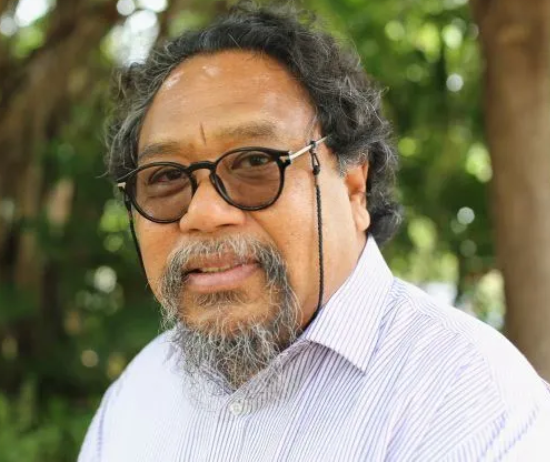 Nakata, Martin N. (1997) The cultural interface: an exploration of the intersection of Western knowledge systems and Torres Strait Islanders positions and experiences. PhD Thesis, James Cook University of North Queensland.
By some unexpected combination of chances, I have more time than I thought for crafting my writing, so I take this window of opportunity to complete reading the thesis. Chapter 1 however has already captured my imagination with the eloquence of his writing style and led me to write this blogpost this morning.
This growing awareness of the uneasy relationship between my lived experience and that ascribed to me by the texts produced about Islanders led to the focus of my study. I wanted to investigate the way these two ‘realities’ have met historically at the interface of Islander experience and Western knowledge systems (Nakata 1997:xii)
References
Nakata, M. N. (2007). Disciplining the savages, savaging the disciplines. Aboriginal Studies Press.
